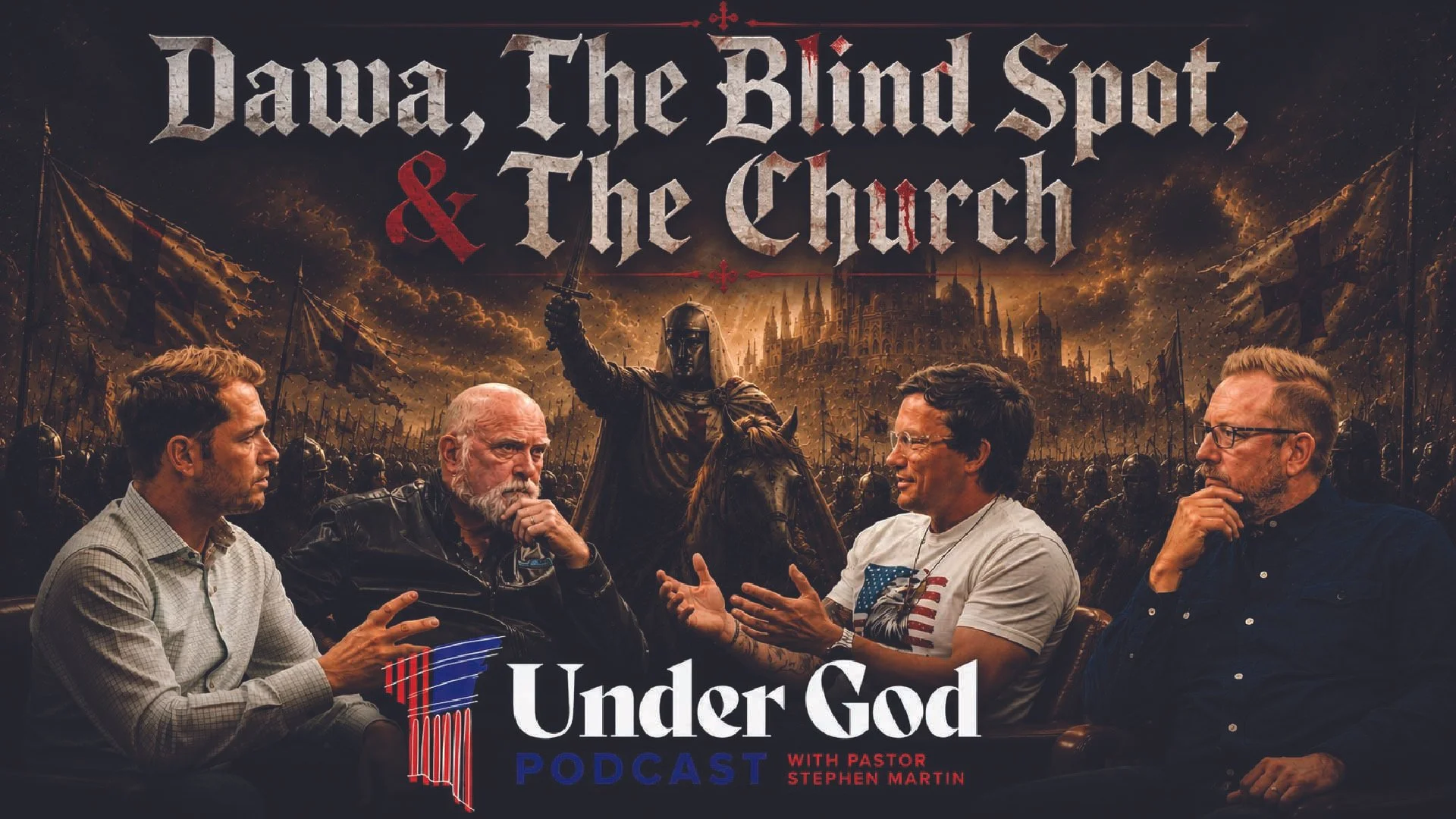
What Really Happened at the Cross? Atonement Explained | Under God Ep 289
What did Jesus actually accomplish on the cross — and does your understanding of it match what the earliest Christians believed? In this special Good Friday episode of the Under God Podcast, Pastor Nathan Brown and Pastor Keegan Sidhu walk through the major theories of atonement that have shaped Christian theology for 2,000 years. The short answer: for roughly the first thousand years of the faith, the church understood the cross primarily as an invasion, a rescue mission, and a victory over sin, death, and the devil — not as an act of divine punishment. Later theologians introduced satisfaction and penal substitutionary frameworks that, while containing biblical elements, shifted the emphasis in ways that have led some believers today to deconstruct their faith entirely. This episode traces when and why each view appeared, examines the Scriptures behind them, and makes the case that the cross is best understood as a multifaceted diamond — and that Good Friday is not a day of defeat but a day of victory.
Pastor Nate, a teaching pastor at Vintage Church in Central Texas and a student of church history and doctrine, guides the conversation through the writings of early church fathers like Irenaeus, Origen, Athanasius, and Gregory of Nyssa before turning to later figures like Anselm of Canterbury, Peter Abelard, and John Calvin. Pastor Keegan, who leads the Vintage Church Belton campus, grounds the discussion in practical pastoral experience — including why a correct view of God's character is essential for every believer. Together they explore why Jesus had to become fully human to face death, how the Abraham and Isaac narrative reveals God's true nature, and why living from the victory of the cross changes everything about the Christian life.
What You'll Discover:
✅ Why the earliest church fathers understood the cross as rescue, invasion, and victory — not punishment or wrath
✅ How Anselm of Canterbury introduced satisfaction theory in 1098 AD — over a thousand years after the church began — and how John Calvin later built penal substitutionary atonement on that foundation
✅ Why Jesus had to take on full humanity to meet death where it existed and defeat it
✅ How the Abraham and Isaac story on Mount Moriah reveals that God is fundamentally unlike the wrathful deities of other religions
✅ Why a distorted view of the cross is the root cause behind many modern faith deconstructions
✅ How Colossians 2:14–15 reframes Good Friday as the day victory was won — not the day of defeat
📖 Scripture Study
📖 Colossians 2:14–15 – At the cross, Jesus canceled the record of charges, disarmed spiritual rulers, and triumphed over them publicly
📖 Hebrews 2:14 – Only by becoming human and dying could Jesus break the power of the devil who held the power of death
📖 Colossians 1:19–20 – God in all his fullness was pleased to live in Christ and reconcile everything through the blood of the cross
📖 Romans 5:18 – Adam's one sin brought condemnation for everyone, but Christ's one act of righteousness brought right relationship with God for everyone
📖 Romans 8:31, 37 – If God is for us, who can be against us? We are more than conquerors through him who loved us
📖 1 Corinthians 15:57 – Thanks be to God, who gives us victory through our Lord Jesus Christ
📖 Ephesians 3:18 – May you understand how wide, how long, how high, and how deep his love is
📖 Isaiah 53:5, 10 – The Savior's suffering makes many righteous; it was the Lord's will that the outcome of this suffering would be redemption
📖 1 John 5:4 – This is the victory that has overcome the world — even our faith
📖 Revelation 12:11 – They triumphed over him by the blood of the Lamb and the word of their testimony
Questions this episode answers:
What is atonement and why does it matter for Christians? — Atonement literally means "at-one-ment" — the process by which humans who were separated from God are made one with him again. How you understand atonement shapes how you view God's character, which is why getting it right matters so much.
What did the earliest Christians believe happened at the cross? — For roughly the first thousand years of church history, the dominant views were Christus Victor (Christ won a victory over sin, death, and the devil), ransom theory (Christ's death freed humanity from captivity), and recapitulation (Christ relived Adam's story and gave it a perfect ending). The emphasis was on rescue, liberation, and conquest — not punishment.
Where did penal substitutionary atonement come from? — The framework traces back to Anselm of Canterbury's satisfaction theory in 1098 AD, which argued that human sin offended God's honor and required a payment. John Calvin later built on Anselm's work during the Reformation to create what is now called penal substitutionary atonement, emphasizing that Jesus bore the penalty of God's wrath in our place.
Why are some Christians deconstructing their faith over the cross? — Many deconstructions begin with a view of God as a "cosmic child abuser" who needed to punish his Son to manage his own anger. This distortion — rooted in an overemphasis on wrath-satisfaction — makes God seem monstrous rather than loving, and people understandably walk away from a god like that. The problem is that this isn't the God revealed in Scripture.
Is the cross about defeat or victory? — Victory. Colossians 2:14–15 says Jesus canceled the record of charges against us, disarmed spiritual rulers, and triumphed over them publicly at the cross. The resurrection confirmed the victory, but the victory itself was won on Good Friday.
📺 YouTube: [episode YouTube link]
📺 Rumble: https://rumble.com/c/UnderGod
🎵 Spotify: https://open.spotify.com/show/5Eg0JfNHL9mEUSrowLrQe6
🍎 Apple Podcasts: https://podcasts.apple.com/us/podcast/under-god-with-pastor-stephen-martin/id1749695148
🌐 Website: https://www.undergodpodcast.com
📸 Instagram: https://www.instagram.com/undergodpod/